
Choosing the best time to visit the Atacama Desert
The best time to visit the Atacama Desert depends on whether your priority is a highland lagoon day, an early trip to El Tatio or an evening observing the sky. Chile Travel recommends April to June in its guidance dated 10 March 2026. That is a useful starting point for choosing a season, while the actual itinerary still needs to fit weather, access conditions and your response to altitude.
Begin by deciding which experience matters most. If the highlands are central to your trip, allow space to rearrange an outing. If night observation is the main reason for travelling, include moonlight as well as seasonal weather in the decision. For the regional temperature pattern, use the separate weather guide. Its Calama climate table provides context rather than a forecast for a particular journey.
April to June as a starting point
The April to June recommendation helps narrow the calendar without making every traveller’s decision identical. An itinerary focused on landscapes needs room for road and trail conditions; an itinerary focused on the night sky needs attention to observing conditions. Choose the period around the activity you would most regret missing, then keep the other days less tightly arranged.
Think about the order of outings as well as the month. San Pedro is around 2,400 m, El Tatio around 4,300 m, and the highland lagoon sector above 4,000 m. A seasonal recommendation does not remove that difference. Give gradual ascent and a manageable pace a place in the schedule, using the altitude planning page for the general guidance.
Early trip to El Tatio
This early tour with breakfast gives you a concrete geyser visit to plan around seasonal conditions.
Hand-picked tours, booked through GetYourGuide. Prices are indicative starting prices in US dollars (as of October 2026). Tap a tour for live availability and the current price in your currency.
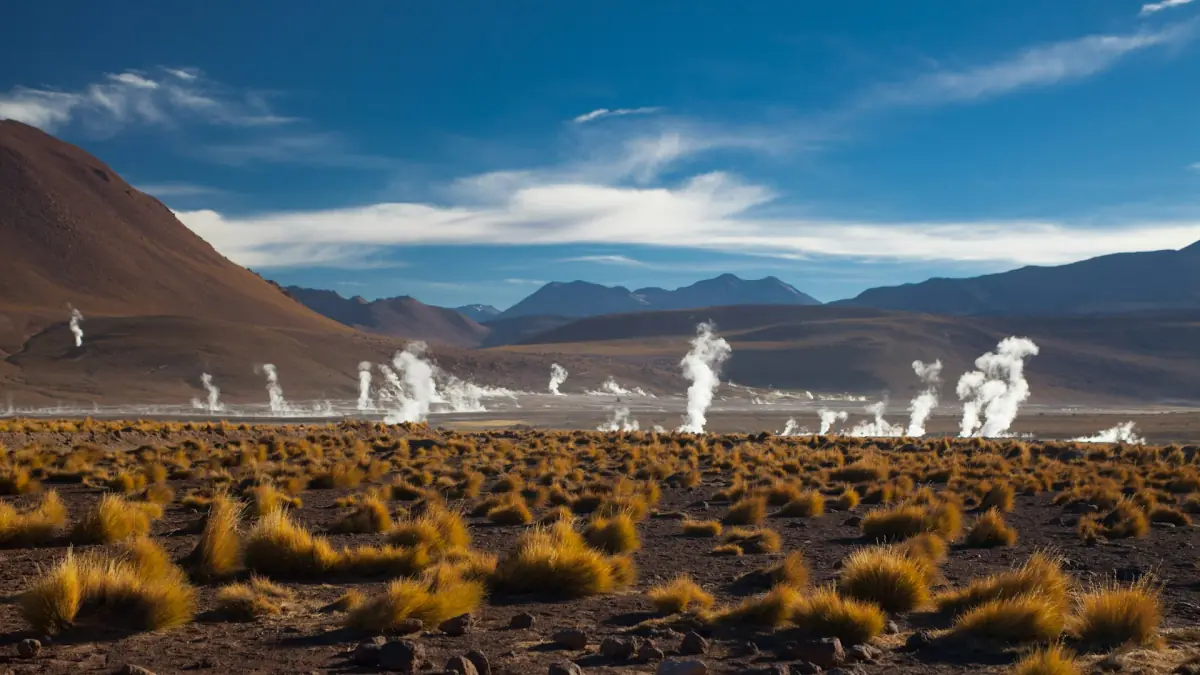
An early El Tatio excursion
A six-hour outing with hotel pickup, bilingual guide and breakfast gives a practical focus to cold-morning and highland planning. Entrance extra.
December to March: planning for highland rain
Chile Travel describes summer moisture reaching the highlands from December to March. Rain and thunderstorms can affect routes during this period. The expression Bolivian or altiplanic winter refers to that summer pattern, rather than the Southern Hemisphere winter. It is not a description of daily rainfall in San Pedro.
For a route centred on Piedras Rojas and the highland lagoons, keep some flexibility between arrival and your onward journey. Access arrangements and the weather need to work together. A confirmed visit slot is part of organising the day; the conditions on the approach still need their own attention. Avoid building the whole trip around a single irreplaceable highland departure.
A cold early start at El Tatio
The El Tatio outing featured here lasts six hours and includes hotel pickup, a guide speaking English and Spanish, and breakfast. Entrance is extra. Its early start makes it a concrete reason to think about warm clothing and the altitude of the destination when choosing and organising your travel dates.
The regional Calama averages show a substantial difference between daytime highs and overnight lows. They are historical normals, not temperatures measured at the geyser field. Pack layers and keep them accessible on the vehicle journey. Breakfast is part of this excursion, while the timing and conditions outdoors remain separate planning questions. The El Tatio guide explains the destination’s access rules and visit considerations.
Night skies: consider the Moon as well as the season
A bright Moon makes faint galaxies and nebulae harder to observe. The Moon itself, planets and other bright objects can remain possible targets, so choose an experience around what you want to see. Individual programmes differ in how they arrange their observing dates. Use the lunar calendar of the particular programme you want to join.
Leave room for weather to change the evening plan. The sky on the exact night available between two transfers remains a separate consideration from the season chosen for your wider route. Read the stargazing guide before making the night observation session the only fixed evening in a short stay. Clothing for time outdoors after dark also belongs in the plan, even when the daytime part of the trip looks mild.
Use current access information for the final decision
Weather can affect access outside the summer rain period too. A municipal report on 13 August 2026 recorded snow problems and affected highland destinations on that day. It is a dated example of disruption, rather than a closure calendar for later months. CONAF also describes temporary trail closures linked to sandstorms, rain, snow and thunderstorms.
Shortly before an excursion, look at the current instructions for that destination and the relevant weather forecast. Keep another day or activity available where the schedule allows. This is more useful than treating a recommended season as a promise that every route will operate. Choose dates for your priorities, then make the daily itinerary responsive to the conditions you actually encounter.
Questions for planning your visit
Which months does Chile Travel recommend?
Its guidance dated 10 March 2026 recommends April to June. Use that recommendation alongside your chosen activities, altitude planning and current access information.
Does the summer rain period mean everything closes?
December to March can bring rain and thunderstorms in the highlands, affecting routes. Make the decision for the specific destination and day rather than treating the entire season as a closure.
Is season enough to plan a stargazing night?
Consider moonlight and the actual sky conditions as well. Faint objects are harder to observe under a bright Moon, while other celestial targets may still suit the outing.